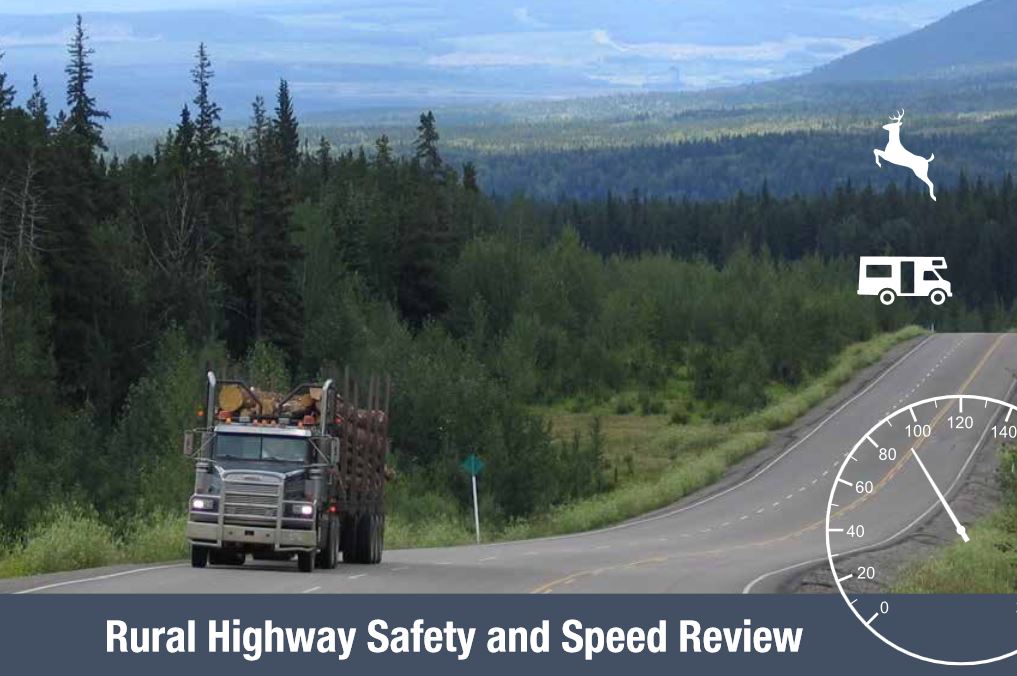
In case you missed it, speed limits on certain stretches of BC highway changed following the Rural Highway Safety and Speed Review in 2014. It’s been more than a year since those new speed limits came in to effect. To be sure those changes are keeping BC travellers safe, we’ve collected and closely reviewed one full year of speed and crash data for each section of highway where speed limits were increased. All the details of our post implementation review can be found here, but the three key areas of our “Rural Highway Safety and Speed Review Report Card” are listed below.
Hint: We need more data and distracted driving plays a big role.
1. More time and data are required
In addition to a thorough review by our engineers, we asked UBC researchers to assess the first year’s crash data and look specifically at the sections of highways where the speed limits increased. They concluded that there wasn’t enough data in a single year to get a complete picture of safety trends on each section of highway where the speed limits were changed. They determined that there was an overall average increase of 11% in crashes in the first year, which is pretty well consistent with the 9% increase we saw on all other BC highways where speed limits weren’t raised.
The one-year increase is also consistent with the rising crash and fatality rates in places where speed limits have remained unchanged, as more people take to the road with lower gas prices and as distracted driving rates continue to climb. The United States, for example, saw a 14% increase in fatalities during the first six months of 2015. Oregon alone experienced a 59% spike during this period. Sweden – known for having some of the safest roads in the world – saw a 4% increase in the number of fatalities in 2014.
UBC researchers and ministry engineers recommended that more analysis be done for a longer period of time to get a more complete picture.
2. Crash rates are down or unchanged in 19 of 33 new speed zones
We’ve carefully examined crash and speed data from the 33 sections of highway where speed limits were increased and found that on 19 of 33 sections of highways, the crash rate either fell or, if there was an increase in the crash rate, drivers were moving at slower speeds than before the speed limits changed.
Crash data from November 1, 2014 to October 31, 2015 (compared with crash data from the previous three years) shows:
- On 12 sections, the rate of speed increased and crashes decreased.
- On seven sections, the rate of speed decreased (due to congestion or other factors) and crashes decreased.
- On seven sections, the data shows that the crash rate increased – despite motorists traveling slower than they did before (due to congestion or other factors) the speed limits were increased.
- On the remaining seven sections, the rate of speed increased and crashes increased.
3. Distracted driving remains the leading cause of crashes.
The 2015 data shows distracted driving is still on the rise. Between November 1, 2014 and October 31, 2015, 28% of all crashes in these areas were primarily caused by distracted driving. Changing weather conditions, distracted driving, driving too fast for conditions, heavy traffic, falling asleep, alcohol, driver error and wild animals can all contribute to crashes. Distracted driving, road conditions, and driving too fast for conditions contributed to 54% of serious crashes where speed limits changed.
What’s next?
We’ve installed variable speed signs and wildlife detection systems, updated winter tire regulations, and introduced new legislation to boost safety and mobility on BC highways as a part of the 2014 Rural Highway Safety and Speed Review.
Although the researchers and ministry engineers recommended we take more time, to be on the safe side, we’ll be introducing new safety features and making adjustments on sections of highway where the crash rates have increased, including rolling back speed limit changes on:
- Highway 1 from Hope to Cache Creek will return to 90 km/hour
- Highway 5A from Princeton to Merritt will return to 80 km/hour
We’ll also continue to work with the police and ICBC on driver education and encouraging safe driving habits.
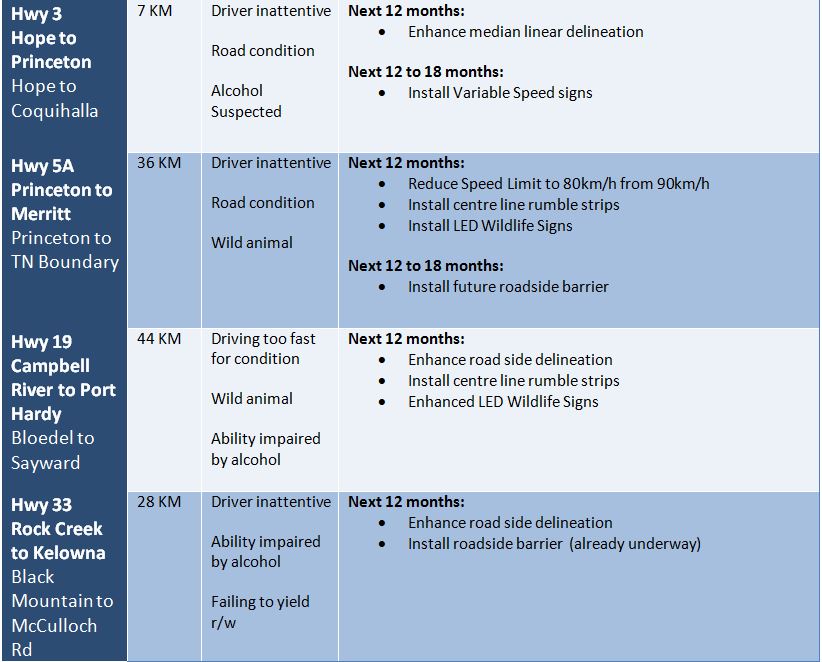
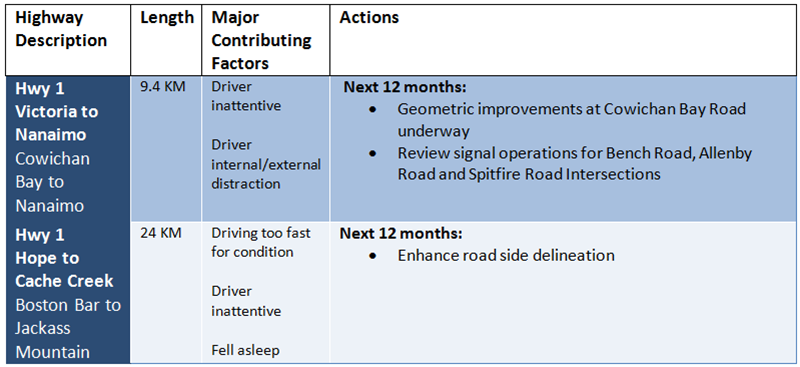
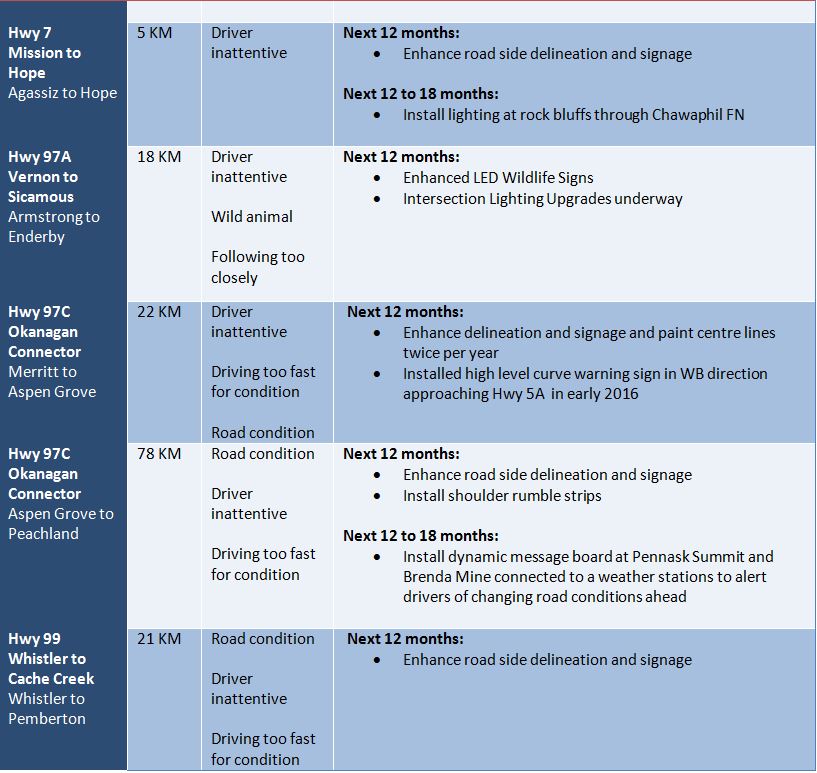
The following charts highlight the actions we’ll be taking on each section of highway as well as identifying the major contributing factors of crashes on each segment of road.
Speed increased, crash rate increased:

Speeds decreased, crashes increased:
Do you have any questions about this or any other work the BC Ministry of Transportation and Infrastructure does? Let us know in the comments below. Safe travels!